In most places, routine trimming on your own property doesn't require a permit. But protected or heritage trees, large-diameter trees, street trees, and significant canopy removal can all trigger local permit rules. Since regulations are set city-by-city and county-by-county, the only reliable way to know for sure is to check your local ordinance.
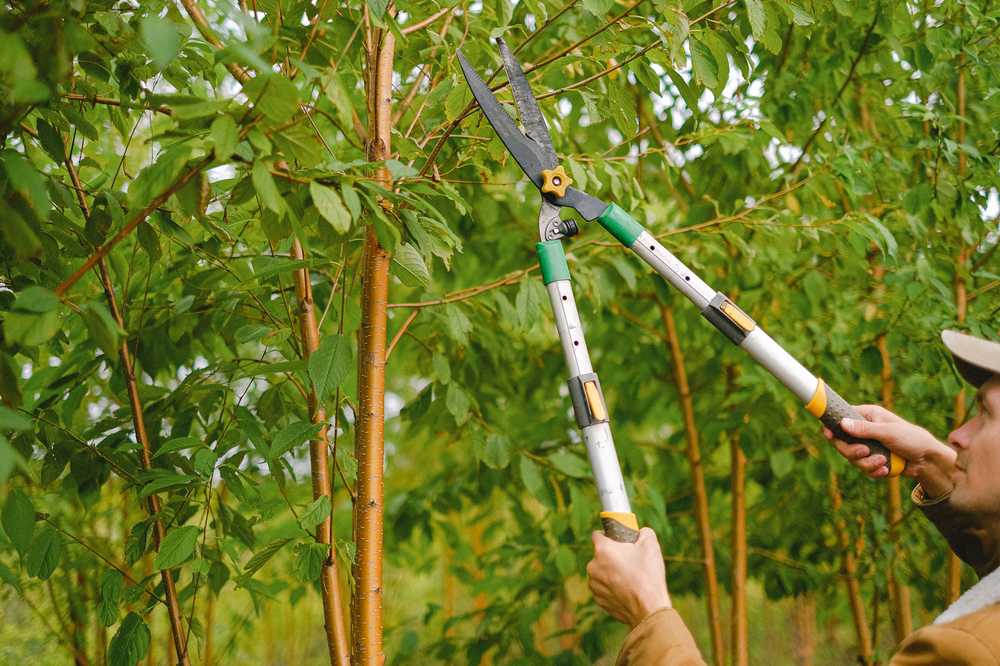
In most places, routine tree trimming on your own property doesn't require a permit. But that's not true everywhere, and it isn't true for every tree. Whether you need a permit to trim a tree depends on where you live, what kind of tree it is, and how much work you're planning to do. There's no single nationwide rule, so the real answer is: it depends on your local ordinance, and it's worth checking before you start.
What's in this guide
Do You Usually Need a Permit to Trim a Tree?
In many areas, ordinary maintenance trimming — cutting back a few branches, shaping growth, removing small limbs — is treated as routine upkeep that doesn't require city or county approval. Some cities and counties are explicit about this, allowing property owners to prune trees on their own land without a permit as long as the work stays within normal limits.
That said, "ordinary maintenance" has boundaries. Depending on local regulations, cutting back a large portion of a tree's canopy, working on a protected or designated tree, or doing significant pruning near a property line or public right-of-way can move the work into a category that does require sign-off. Certain protected trees are regulated no matter how minor the work seems.
When Might Tree Trimming Require a Permit?
A few situations tend to come up again and again in local tree ordinances. These are examples of what can trigger a permit requirement — not universal U.S. rules, since every jurisdiction sets its own thresholds:
- Protected or heritage trees — many cities list trees protected for their size, species, age, or historical value, and even light pruning can require approval
- Trees above a certain size — some ordinances set a trunk-diameter threshold, commonly somewhere between 6 and 24 inches depending on the city
- Trees in conservation or environmentally sensitive areas — natural resource buffers, steep-slope zones, and similar overlays can add restrictions
- Street trees or trees near public property — trees in a right-of-way or planting strip are often treated differently than trees fully within a private yard
- HOA rules — separate from government permits, but an HOA may require its own approval
- Significant pruning — removing a large share of a tree's canopy at once, sometimes called "topping," is restricted in some cities regardless of protected status
If none of these apply, routine trimming is often unregulated. If one or more does, it's worth checking before you cut.
Once you know it's allowed, get a cost estimate
Use the free calculator for a localized trimming estimate based on your tree's size and condition.
Calculate My Cost →Does the City or County Require a Tree-Trimming Permit?
Local government is the most reliable source for this answer, since permit rules are set at the city or county level, not federally. To check your specific requirements:
- Look up your city or municipal government website, or your county's if you're outside city limits.
- Search for the planning, forestry, parks, public works, or building department — tree regulations are usually handled by one of these.
- Look for a tree-preservation ordinance, tree permit page, or protected-tree list specific to your area.
Requirements can differ significantly even between neighboring cities, so don't assume your city's rules match a nearby town's.
Do You Need a Permit to Prune a Tree on Private Property?
Owning the property doesn't automatically mean every type of tree work is unrestricted. Whether a permit is needed on private property usually comes down to local ordinances and whether the specific tree is protected.
Ordinary maintenance pruning is commonly allowed without a permit. Significant pruning, work on a protected or heritage tree, or full removal is more likely to require approval, even on land you own outright. If you're not sure which category your project falls into, it's worth verifying the rule for your exact property and tree before starting, rather than assuming.
What Happens If You Trim a Protected Tree Without Permission?
Local tree ordinances are enforced, and violating one can carry real consequences. Depending on the jurisdiction, unauthorized work on a protected tree can potentially lead to enforcement action, fines, required corrective steps, or a mandate to plant replacement trees. Penalties vary widely by location and aren't guaranteed everywhere, but they're a good reason to check first if there's any doubt about a tree's protected status.
How to Check Whether You Need a Tree-Trimming Permit
- Identify your property's city and county.
- Search the official government website for tree permits or tree-preservation rules.
- Check whether your specific tree is on a protected or heritage list.
- Confirm whether the rule applies to pruning, removal, or both.
- Contact the relevant local department directly if anything is unclear.
- Get written confirmation or the required permit before starting regulated work.
⚠️ Have a dangerous tree? Some states, including Florida, give homeowners a documented path to skip local permitting when a certified arborist confirms the tree is a hazard — see the state table below.
Once you've confirmed that your trimming project is allowed — or you've obtained any required approval — you may want a sense of what the work will cost. Our tree trimming cost calculator can give you a starting estimate based on your project's details. It's worth noting that the calculator estimates cost only; it doesn't determine whether a permit is required for your tree.
Do Any States Have Their Own Tree-Trimming Permit Laws?
Almost all tree permit requirements come from city or county ordinances, not state law. In the large majority of states, there is no statewide permit requirement at all — whether you need a permit depends entirely on which city or county you're in, and it can vary from one town to the next within the same state.
A small number of states have some kind of statewide framework that touches tree work, though even in these states, most day-to-day permit decisions still come from local ordinances layered on top. Here's what's actually verifiable at the state level:
| State | State-Level Framework | What It Actually Covers |
|---|---|---|
| California | California Environmental Quality Act (CEQA), Public Resources Code §21000 et seq. | Requires environmental review for discretionary projects that could significantly affect protected trees on larger or public-adjacent parcels; local city/county ordinances still set most permit thresholds |
| Oregon | ORS 527.722 | Limits how far a local government's forest-practice regulation can reach beyond a city's urban growth boundary; permit rules within cities are still set locally |
| Florida | Florida Statute §163.045 | Prohibits a local government from requiring notice, a permit, or a fee for pruning, trimming, or removing a dangerous tree on qualifying residential property, when the property owner has documentation from an ISA Certified Arborist or a Florida-licensed landscape architect; healthy or "merely inconvenient" trees still fall under county and city rules |
| Maryland | State reforestation law | Applies specifically to trees removed during road construction, not general residential tree work |
| New Jersey | State reforestation law | Applies specifically to trees on state-owned or state-maintained land, not private residential property |
| All other states | No statewide tree permit law identified | Permit requirements are set entirely by individual cities and counties |
Even in the states with a framework listed above, that framework doesn't replace checking your local ordinance — it just adds an extra layer on top. If your state isn't one of the five above, that doesn't mean permits are never required; it means the answer is determined completely at the city or county level, which is exactly why checking locally (as outlined earlier) is the step that actually matters.
Frequently Asked Questions
Do I need a permit to trim a tree on my own property?
Often not for routine maintenance, but it depends on your local ordinance and whether the tree is protected. Check with your city or county to be sure.
Do you need a permit to prune a tree?
Sometimes. Light, routine pruning is commonly unregulated, while significant pruning or work on a protected tree may require approval.
Do protected trees require a trimming permit?
Frequently, yes. Cities that designate heritage or protected trees often require a permit even for pruning, not just removal.
Can I trim a tree without a permit if it is dangerous?
Many jurisdictions have emergency provisions for hazardous trees, but rules and required follow-up steps vary. Check with your local authority for the specifics.
How can I find out if my city requires a tree-trimming permit?
Search your city or county government website for a tree ordinance, protected-tree list, or permit page, or contact the relevant local department directly.
💡 Get an instant, localized estimate. No email required. Try the free calculator →