A dead tree in your yard isn't just an eyesore — it's a liability. Dead wood is unpredictable, brittle, and prone to sudden failure, which is why removing one usually costs more than removing a healthy tree of the same size. On average, homeowners pay $300 to $2,000 to remove a dead tree, with costs climbing past $3,000 for large, hazardous, or hard-to-access trees.
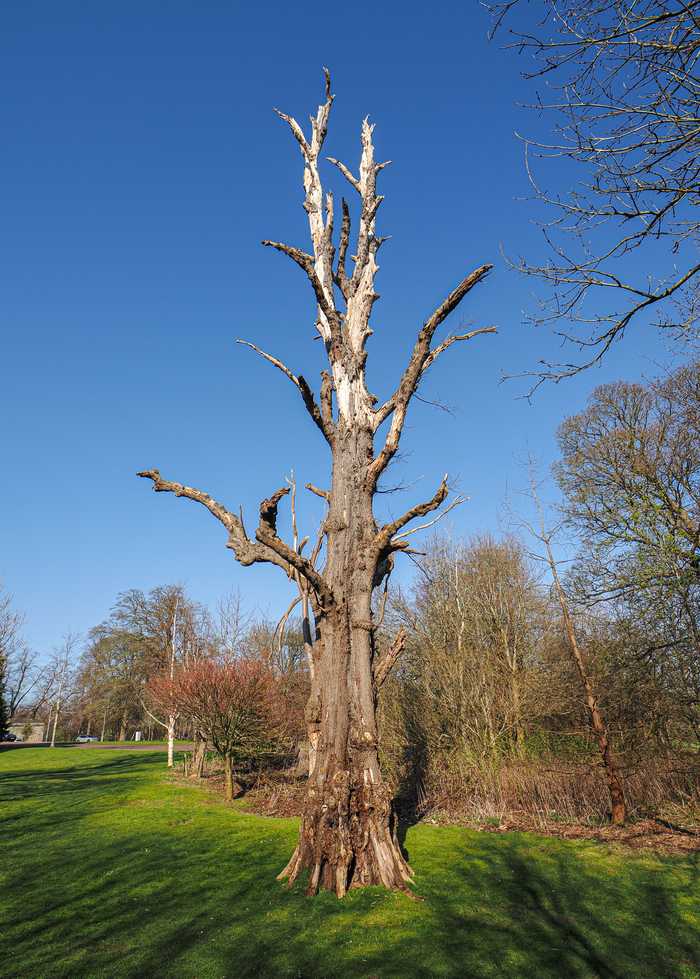
Here's a full breakdown of what drives the price, and how to tell if your dead tree is an emergency.
What's in this guide
Average Cost to Remove a Dead Tree by Size
Average Dead Tree Removal Cost by Size
Blended national estimate — condition and access will move this
| Tree Size | Average Cost |
|---|---|
| Small (under 30 ft) | $200 – $600 |
| Medium (30 – 60 ft) | $500 – $1,500 |
| Large (60 – 80 ft) | $1,000 – $2,500 |
| Extra-Large (80+ ft) | $1,800 – $3,500+ |
These figures run higher than equivalent healthy-tree removal costs — typically 15% to 30% more — because of the added risk and unpredictability crews take on.
Get a number specific to your tree
Use the free calculator to get a localized estimate based on your tree's exact height, trunk diameter, and site conditions.
Calculate My Cost →Why Dead Trees Cost More to Remove
1. Structural Unpredictability
Dead wood loses moisture and flexibility over time, making branches and trunks prone to snapping without warning — even in light wind. Crews often need to work more slowly and use additional rigging to control each cut safely, which adds labor time.
2. Higher Risk Premium
Arborists price in risk. A tree that could shed limbs during removal, or one that's already partially collapsed, commands a higher rate than a healthy tree in stable condition.
3. Root and Trunk Instability
If a tree died from disease, pest infestation, or root rot, the base of the tree may be structurally compromised. This sometimes requires additional equipment (like a crane) even for moderately sized trees, since climbing the tree itself may be unsafe.
4. Debris and Cleanup
Dead trees often shed bark, brittle branches, and rot debris throughout the process, which can mean more cleanup time than a healthy tree removal.
Is a Dead Tree an Emergency?
Not every dead tree needs same-day removal, but certain warning signs mean you shouldn't wait:
- Leaning noticeably toward your house, driveway, or a neighboring property
- Large dead limbs overhanging a structure, walkway, or power line
- Visible trunk cracks, cavities, or fungus at the base
- Bark falling off in large sections, exposing dry wood underneath
- No leaves during growing season combined with brittle, easily-snapped branches
If any of these apply, especially near a structure or power line, treat it as urgent and get a certified arborist out for an on-site assessment — waiting can turn a routine removal into an emergency, and emergency removal typically costs 40% to 60% more.
⚠️ Near a power line? Don't approach it yourself — contact your utility company. Many will trim or remove the hazard portion at no cost, since it threatens their equipment too.
Does Homeowners Insurance Cover Dead Tree Removal?
Generally, no — standard homeowners insurance does not cover the cost of removing a dead tree that hasn't fallen or caused damage yet. Insurance typically only pays out after a tree falls due to a covered peril (like a storm) and damages a structure. Removing a standing dead tree proactively, even a hazardous one, is usually considered routine maintenance and paid out of pocket.
For the full breakdown of when insurance does and doesn't apply, see our tree removal insurance coverage guide.
How to Get an Accurate Quote
- Get 3 written quotes from licensed, insured arborists — prices for dead tree removal vary more than healthy tree removal because risk assessment is subjective
- Ask about stump removal separately — it's almost never included in the base price
- Confirm insurance and certification — a dead or hazardous tree removal is exactly the job where an uninsured crew is the riskiest to hire
- Mention any nearby structures or power lines upfront — this affects the quote significantly and should be disclosed before, not after, a crew arrives
Frequently Asked Questions
Is it more expensive to remove a dead tree than a live one?
Yes, typically 15–30% more, due to the added risk of unpredictable wood failure and the extra care required during removal.
How urgent is removing a dead tree?
It depends on location and condition. A dead tree leaning toward a structure or power line should be addressed immediately. A dead tree in an open area, away from anything it could damage, can often be scheduled normally.
Can I remove a dead tree myself?
Small dead trees away from structures can sometimes be handled DIY, but dead wood's unpredictability makes this riskier than healthy tree removal. For anything over 15–20 feet, or anything near a structure, professional removal is strongly recommended.
Will my dead tree removal cost more if it's already partially fallen?
Yes. Partially fallen or leaning dead trees often require emergency-rate pricing since they pose an immediate risk and may need same-day response.
💡 Get an instant, localized estimate. No email required. Try the free calculator →
Related Guides
- Do I Need a Permit to Trim a Tree?
- Tree Pruning vs. Trimming: What's the Difference?
- Do I Need a Permit to Remove a Tree?
- Fallen Tree Removal Cost: 2026 Price Guide
- Does Home Insurance Cover Tree
- How Much Does It Cost to Remove a Tree in 2026?
- Stump Removal Cost: 2026 Price Guide
- Browse all guides →