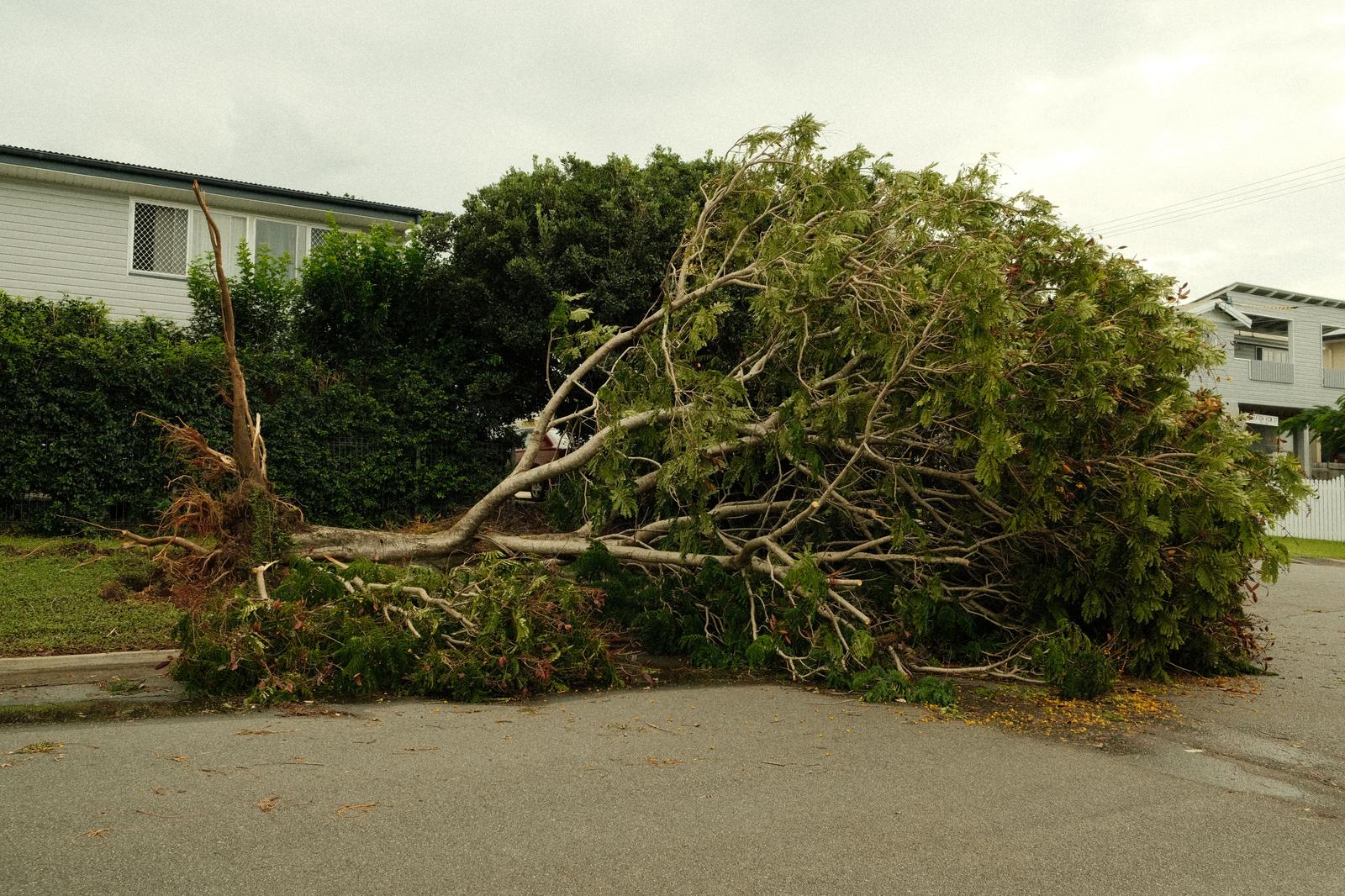
A tree crashed down in your yard overnight, and now you're staring at a mess of branches, wondering what it's going to cost to clean up. Fallen tree removal cost typically runs $200 to $2,500 depending on the tree's size and how it landed — but storm damage, blocked driveways, or a trunk resting on your fence can push that number higher fast.
This guide breaks down exactly what you'll pay in 2026, based on tree size, location, and cleanup complexity. You'll learn how fallen tree pricing compares to standing tree removal, whether your situation counts as an emergency, who's responsible when a tree crosses property lines, and how to trim your bill without cutting corners on safety. By the end, you'll know exactly what to expect — and how to hire the right crew for the job.
What's in this guide
Average Price by Size
Average Fallen Tree Removal Cost by Size
Blended national estimate — location and damage change this
| Tree Size | Height | Cost Range | Average |
|---|---|---|---|
| Small | Under 30 ft | $100 – $400 | $250 |
| Medium | 30–60 ft | $300 – $1,000 | $650 |
| Large | 60–80 ft | $1,000 – $2,500 | $1,750 |
Factors That Affect Fallen Tree Removal Cost
No two fallen trees cost the same to remove — the final price depends on a handful of variables that either add labor or add risk.
Tree Size
The bigger the tree, the more it costs. A small tree (under 30 feet) might run $100–$400, while a large fallen tree (over 60 feet) can hit $1,000–$2,500+ due to the volume of wood and debris involved.
Tree Type
Hardwoods like oak and maple are denser and take longer to cut and haul than softer species like pine. Trees with heavy branch structures (think: sprawling maples) also mean more cleanup time than a single straight trunk.
Location and Accessibility
A tree that fell in an open backyard is cheap to reach. One tangled in a fence, resting against your house, or blocking a narrow side yard requires more careful (and expensive) manual work, since crews can't just bring in heavy machinery and go.
Damage to Structures
If the tree landed on a roof, deck, shed, or car, costs jump significantly. Crews have to work slowly and carefully to avoid making the damage worse, and you may need a structural inspection afterward — separate from the removal cost itself.
Stump and Debris Removal
Removing the fallen tree is one price; grinding the stump and hauling away branches, leaves, and wood chips is often a separate line item. Ask upfront whether debris haul-away is included, or you could be surprised by an add-on fee.
Permits
Most emergency fallen tree removal doesn't require a permit, but if the tree is on protected land, near a property line, or part of a larger land-clearing job, your city or HOA may require one — adding both cost and time.
Fallen Tree Removal vs. Standing Tree Removal
It seems obvious that a tree already on the ground should cost less to remove than one still standing — and in most cases, that's true. But the gap isn't as big as people expect, and it can even flip depending on how the tree landed.
Fallen Tree Removal
Once a tree is down, the hardest part of the job is already done. Crews skip the climbing, rigging, and controlled-drop cutting that standing removal requires, and go straight to sectioning and hauling the wood. This usually makes fallen tree removal faster and cheaper — unless the tree landed somewhere awkward. A trunk wedged against a house, tangled in a fence, blocking a driveway, or resting on soft or sloped ground can erase that savings fast, since crews have to work carefully around the damage risk instead of just cutting and clearing.
Standing Tree Removal
A standing tree has to be taken down piece by piece, especially near a house, power line, or property line, to control exactly where each section falls. That means climbing gear, rigging, and sometimes a bucket truck or crane — all of which add labor time and equipment cost. Standing removal is generally more predictable to price, since the tree's position and lean are visible upfront, but it's rarely the cheaper option compared to a straightforward fallen tree in an open area. You can also check Standing Tree Removal Costs for more details.
| Metric | Fallen Tree | Standing Tree |
|---|---|---|
| Climbing/rigging required | No | Yes |
| Small tree cost | $100–$400 | $150–$500 |
| Medium tree cost | $300–$1,000 | $450–$1,200 |
| Large tree cost | $1,000–$2,500+ | $1,500–$3,000+ |
| Relative cost | Lower — labor cut roughly in half | Higher |
📏 Rule of thumb: fallen tree removal typically runs 10–20% cheaper than removing the same tree while standing — but always get a quote based on your specific situation rather than assuming the discount applies automatically.
Can You Remove a Fallen Tree By Yourself?
For a small tree or a few fallen branches, DIY removal can save you the full cost of hiring a crew. For anything larger, it's rarely worth the risk.
When DIY Makes Sense
If the tree is small (under 6 inches in diameter), fell in an open area away from structures or power lines, and you have a chainsaw and basic experience using one, cutting it up and hauling it yourself is realistic. Many municipalities will also pick up bundled branches and yard waste on a scheduled collection day, cutting your cost to nearly zero.
Safety Risks to Know
Fallen trees aren't as harmless as they look. Trunks and branches are often under tension — meaning they can snap back or roll unexpectedly once you start cutting. Risk goes up sharply if:
- The tree is touching or near a power line (never approach this — call the utility company, not a tree service)
- The trunk is elevated or wedged, so it could shift or drop once cut
- The tree is large enough that a falling section could cause serious injury
- You don't have proper safety gear (eye protection, gloves, chainsaw chaps)
When to Call a Professional
Bring in a professional if the tree is large, resting against your house or another structure, tangled with power lines, or positioned where you can't predict how it will move once cut. Professional removal is the safer choice for unstable or hazardous trees, especially when structures or utility lines are nearby. Insurance companies may also require a licensed removal service to process a storm-damage claim.
Not sure what your situation will actually cost?
Enter your tree's height, trunk diameter, species, and ZIP code for a localized estimate in under 60 seconds.
Calculate My Cost →Other Add-On Services
Removal isn't always the only cost — here's what other common add-ons typically run:
| Service | Cost Range | Notes |
|---|---|---|
| Stump grinding | $150 – $400 | Standard surface grind |
| Full stump + root removal | $300 – $500+ | Includes major root excavation |
| Chemical stump removal | $50 – $100 | Takes 4–6 weeks |
| Wood chipping (branches/debris) | $50 – $100 | Often bundled with cleanup |
| Log splitting (keep firewood) | $50 – $100 | Processed into usable logs |
| Travel fee (30+ min away) | $50 – $200 | Distance/fuel surcharge |
Insurance and Fallen Tree Removal Cost
Whether insurance covers your fallen tree usually comes down to one thing: did it damage anything? Most homeowners insurance policies cover tree removal if the tree fell on your house, garage, or another insured structure — a parked car falls under auto insurance instead — but typically won't pay if the tree simply fell in your yard without hitting anything. Some other structures, like fences, may or may not be covered depending on your specific policy.
Coverage can also depend on the cause. Damage from a storm, high winds, or other covered peril is usually included, while a tree that fell due to disease, rot, or poor maintenance may be denied as a "preventable" loss.
For a full breakdown of coverage scenarios, deductibles, and how to file a claim, check out our complete guide on homeowners insurance and tree removal.
How to Reduce Costs: Money-Saving Tips
Fallen tree removal doesn't have to drain your wallet. A few smart moves can bring the price down significantly:
- Get multiple quotes. Prices vary more than people expect between companies. Get at least 3 quotes before hiring — the difference between the highest and lowest bid can be hundreds of dollars for the same job.
- Avoid emergency/after-hours pricing. If the tree isn't blocking a road, touching power lines, or actively damaging your home, you can often wait a day and book standard service instead of paying an emergency premium.
- Bundle stump removal. If you're already having the tree hauled away, ask about bundling stump grinding into the same visit. Booking it separately later usually costs more than adding it to the original job.
- Keep the wood yourself. Some companies will knock money off the price if you let them leave the cut logs instead of hauling them away — useful if you have a fireplace or wood stove, or know someone who does.
- Check for municipal or storm cleanup programs. After major storms, some cities offer free or subsidized debris removal. Check your local government's website before hiring a private crew.
- File an insurance claim, if eligible. If the tree damaged a structure and the cause is covered, filing a claim can offset most of the cost — just weigh it against your deductible and potential premium increase first.
- Do the easy part yourself. You don't have to DIY the whole job — hauling smaller branches to the curb yourself while a pro handles the trunk can reduce labor hours and lower your bill.
Conclusion
Fallen tree removal cost usually lands between $200 and $2,500, but the exact number depends on the tree's size, how it fell, and how much cleanup is involved. Storm damage, blocked driveways, and trees resting on structures all push the price higher — while a small tree in an open yard is one of the cheapest cleanup jobs you'll face.
Before you hire anyone, get a few quotes, check whether insurance applies, and confirm what's included (stump grinding, debris haul-away, etc.) so there are no surprise fees.
💡 Get your personalized estimate. Use the free calculator to see what your specific situation will cost in under a minute. Try the free calculator →
FAQs
How much should it cost to remove a fallen tree?
Most fallen tree removal costs between $200 and $2,500, depending on the tree's size, location, and how much cleanup is involved.
Will homeowners insurance cover fallen tree removal?
Usually only if the tree damaged a covered structure, like your home or garage. If it just fell in your yard, it's typically not covered.
How to get rid of a fallen tree?
You can cut and haul it yourself if it's small and safely accessible, or hire a tree removal company for anything large or near structures and power lines.
Who is responsible for removing a fallen tree?
The tree's owner is generally responsible, even if it falls onto a neighbor's property, though insurance and local laws can affect this.
Who to contact if a tree falls on your property?
Call a licensed tree removal service. If it's touching power lines or blocking a road, contact your utility company or local authorities first.
Related guides
- Do I Need a Permit to Trim a Tree?
- Tree Pruning vs. Trimming: What's the Difference?
- Do I Need a Permit to Remove a Tree?
- Dead Tree Removal Cost: 2026 Price Guide
- Does Home Insurance Cover Tree Removal?
- How Much Does It Cost to Remove a Tree in 2026?
- Stump Removal Cost 2026: What You'll Actually Pay
- Browse all guides →